
Best Source for B2B Industry Trends, News and Updates
In 2026, the broadcasting industry is still growing. The global TV and Radio Broadcasting market size is forecasted to grow from approximately USD 364.4 billion in 2025 to approximately USD 379.4 billion in 2026, reaching nearly USD 520.5 billion by 2034, at a CAGR of 4.1% between 2025 and 2034. Whenever a technological improvement occurs, it directly affects broadcasters. For instance, with the increased influence of Artificial Intelligence, many broadcasters are incorporating it to create better scripts, plan content, manage content, and edit.
Satellite and TV are still contributing to revenue; however, internet-based data delivery platforms such as OTT services are increasingly integral to continued success. The new innovations have reshaped the traditional content creation process and sped it up worldwide.
If you are planning to start a business with broadcasting equipment, the following are some of the most relevant and in-demand equipment used in the broadcasting industry:
For live streaming and broadcasting, a camera is one of the most basic pieces of equipment, serving as a medium for coverage and communication. It records live scenes in one place and streams them through various lenses, such as wide, broad, close-up, etc. Cameras are used to cover live events such as sports and award shows, switching angles and transmitting live video to channels and viewers.
Audio equipment, such as microphones and mixers, is used to process sounds, voices, and music, giving live effects in streaming and broadcasting. This equipment is part of a chain process for capturing sound and voices, mixing them, creating the perfect audio with relevant effects, and delivering it to listeners.
Transmitters, such as encoders, convert signals, both audio and video, into radio waves. These are used to send data from one point to another via signals and waves. The most common transmission gears are terrestrial (for Radio), UHF (for TV), satellite, and cable.
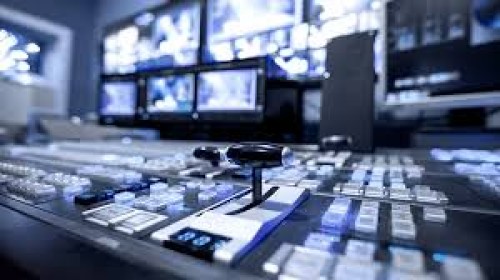
Switchers mix audio and video, ensuring smooth transitions between multiple screens, cameras, audio, and video, whereas monitors display all of these visuals and a multiview. This equipment ensures that everything is covered and that every angle is shown in the live video, without any interruptions.
Lighting equipment is used to create the live-stream mood and the atmosphere of the setup. Common lighting equipment used for broadcasting is LED lights, Fresnel lights, spotlights, and softboxes.
The search for the right broadcasting equipment manufacturers starts with looking for the right hubs of equipment production. The following are some of the largest regions worldwide that produce and supply premium-quality broadcasting equipment.
Los Angeles is a hotspot for suppliers of studio and production gear. It is due to Hollywood’s entertainment ecosystem, where many manufacturers and resellers of cameras, lighting, audio consoles, and broadcast systems operate.
Seoul is known for advanced electronics and digital broadcast technologies, including high-speed transmission and next-generation studio systems.
New York is another key media market with suppliers specializing in live production, broadcast studios, and digital streaming equipment. The city’s broadcast ecosystem supports news networks and corporate media houses.
Europe’s major broadcast services and tech city, London, has many resellers and system integrators serving TV networks, radio stations, and live event producers.
Dubai is a strategic logistics hub connecting suppliers from Europe, Asia, and the Americas. Many international distributors and resellers have regional offices here, offering broadcast and live-production gear with localized support.
Singapore is another business and logistics hub with many international suppliers servicing broadcast equipment, telecom gear, and integrated media solutions.
Here are some of the biggest B2B marketplaces where you can find top broadcasting equipment suppliers worldwide online:
Alibaba is one of the world’s largest B2B marketplaces, offering a wide selection of broadcast equipment suppliers for TV, radio, and live production. Buyers can find cameras, switchers, audio mixers, lighting systems, and transmission equipment from manufacturers and exporters worldwide. The platform allows users to filter suppliers by country, certifications, and trade assurance. Alibaba is especially useful for bulk sourcing and private labeling. With detailed product listings, supplier ratings, and trusted payment gateway options available, it supports both startups and large broadcast businesses looking to scale their operations efficiently.
Global Sources is a trusted B2B sourcing platform that connects buyers with reputable manufacturers, particularly in Asia. It features a wide range of professional broadcast equipment, including studio cameras, broadcast monitors, encoders, and audio systems. The platform emphasizes supplier authentication and quality standards, making it ideal for buyers seeking reliable long-term partners. Global Sources also integrates with major trade shows, enabling buyers to connect both online and in person. Its detailed supplier profiles and RFQ tools help broadcasters and system integrators source high-quality equipment with confidence.
Made-in-China is a leading B2B platform focused on Chinese manufacturers and exporters. It offers an extensive catalog of broadcast and AV equipment, including production cameras, mixing consoles, studio lighting, and transmission hardware. The platform is particularly attractive to buyers seeking cost-effective solutions and factory-direct pricing. Detailed product specifications, supplier certifications, and comparison tools make sourcing easier. Made-in-China is widely used by broadcasters, resellers, and live production companies seeking scalable manufacturing, customization options, and competitive bulk pricing.
Tradewheel.com is a growing global B2B marketplace that connects buyers with broadcast equipment manufacturers and suppliers worldwide. The platform offers products such as professional cameras, audio equipment, live-streaming gear, broadcast accessories, and studio solutions. Tradewheel.com is designed for international trade. The platform enables importers, distributors, and media production companies of every size to get exactly what they need. With easy RFQ submission, direct supplier communication, and global supplier reach, Tradewheel.com simplifies sourcing. It is especially beneficial for businesses seeking competitive pricing, export-ready suppliers, and new sourcing opportunities.
ThomasNet is a well-established industrial sourcing platform focused primarily on North American suppliers. It is ideal for buyers looking for broadcast equipment manufacturers, OEMs, and system integrators based in the United States and Canada. ThomasNet offers detailed company profiles, certifications, and capabilities, making it easier to evaluate suppliers. The platform is widely used by professional broadcasters, studios, and enterprises that prioritize compliance, quality standards, and domestic sourcing. It is particularly strong for custom solutions, engineered products, and long-term B2B partnerships.
EC21 is a global B2B marketplace connecting buyers with suppliers across multiple industries, including broadcast and media equipment. The platform lists a variety of products, including studio cameras, broadcast audio systems, signal processors, and live production tools. EC21 supports international trade with supplier verification, inquiry tools, and multilingual accessibility. It is suitable for small to mid-sized broadcasters and resellers looking to explore multiple sourcing options worldwide. The platform’s straightforward interface makes it easy to compare suppliers and initiate direct business communication.
TradeIndia is a prominent B2B platform featuring Indian manufacturers, exporters, and suppliers. It offers broadcast and audiovisual equipment, including microphones, mixers, cameras, studio accessories, and transmission components. TradeIndia is particularly useful for buyers looking to source from India’s growing electronics and media equipment sector. The platform provides supplier ratings, product catalogs, and inquiry tools to simplify procurement. It supports both domestic and international buyers seeking competitive pricing, regional expertise, and access to emerging broadcast equipment manufacturers.
Exporters.SG is a Singapore-based B2B directory that connects global buyers with suppliers, exporters, and distributors across Asia. The platform includes listings for broadcast equipment, media technology products, and professional AV solutions. It is especially useful for buyers targeting Southeast Asian suppliers or seeking Asia-Pacific trade connections. Exporters.SG focuses on company profiles and direct contact information, enabling straightforward supplier outreach. Its regional strength makes it a practical option for importers, system integrators, and broadcasters expanding into Asian markets.
HKTDC (Hong Kong Trade Development Council) is a highly reputable B2B platform offering access to verified international suppliers. It features broadcast and professional AV equipment, including studio systems, live production tools, and transmission solutions. HKTDC is known for its strong emphasis on quality, compliance, and global trade facilitation. The platform also connects buyers with major trade fairs and exhibitions, offering additional sourcing opportunities. It is ideal for broadcasters, distributors, and procurement teams seeking reliable, export-ready suppliers with strong international credibility.
Kompass is a global business directory that helps buyers find broadcast equipment manufacturers and service providers worldwide. Unlike traditional marketplaces, Kompass focuses on detailed company data, including industry classifications, certifications, and operational capabilities. It is well-suited for B2B buyers conducting supplier research, vendor shortlisting, and market analysis. Broadcasters, system integrators, and media companies use Kompass to identify specialized suppliers for cameras, audio systems, transmission equipment, and broadcast services. Its structured search tools make it valuable for professional procurement planning.
One of the biggest trends is the shift toward IP-based workflows. It is replacing traditional infrastructure as broadcasters increasingly use remote and distributed production setups that enable different teams to produce live content from different locations at reduced cost. Where the demand for 4K and 8K cameras and advanced video compression technologies continues to grow, these upgrades help broadcasters deliver higher-quality visuals across television, OTT, and streaming platforms, especially for sports and live events.
Another major trend shaping broadcast equipment is the integration of artificial intelligence and automation. AI-powered tools are now used for real-time video switching, audio leveling, content tagging, and quality control, improving efficiency and reducing human error. Additionally, 5G connectivity is enabling more flexible live broadcasting, particularly for outdoor and mobile productions. Equipment manufacturers are also focusing on compact, energy-efficient, and software-driven hardware, making broadcast systems more scalable and future-ready. Together, these innovations are transforming how broadcasters deliver content in an increasingly competitive media landscape.
In this blog, we have discussed how the broadcasting industry remains relevant and is growing through a phase of innovation driven by the integration of Artificial intelligence and cloud computing. We have mentioned the top equipment used in broadcasting and live streaming. Furthermore, we have discussed the hubs of manufacturing the equipment around the world and have mentioned the top 10 marketplaces to find multiple broadcasting equipment suppliers to start a new streaming business while considering the emerging trends.