Best Source for B2B Industry Trends, News and Updates
Himalayan pink salt is mined in Khewra, Punjab, Pakistan, not in the Himalayas. Importers buy it in bulk for food, spa, and home-decor products. To find them, search customs records and B2B marketplaces. Then check each company’s registration and certificates before you quote. This guide covers what buyers in the USA, UK, and Europe check, and where to find buyer data.
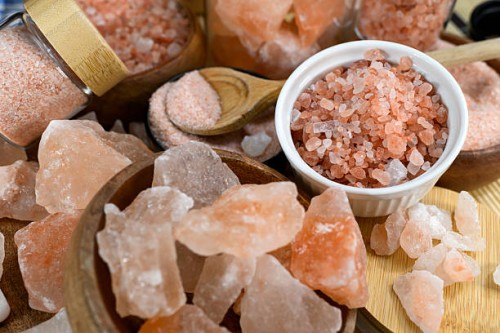
This blog will provide you with a comprehensive list of Himalayan salt importers, including top buyers in the USA, UK, Europe, the Middle East, Asia, and Africa. If you are a certified pink Himalayan salt supplier looking to export and want to explore genuine salt buyer lists and directories, then this blog is for you. Read on to connect with Himalayan salt buyers online globally!
Demand comes from three main groups. Food buyers sell cooking and finishing salt. Spa and wellness businesses use salt in bath products and scrubs. Home-decor buyers sell salt lamps and slabs. Each group buys in a different format, so start by asking which one you are selling to.
Spa buyers often also source other cosmetic ingredients. If you are planning a product line, see our guide to starting a makeup line.
Public trade data is hard to read for this product. Customs codes group Himalayan salt with other salt under HS heading 2501, so no figure covers Himalayan salt alone. According to recent trade data from the UN Comtrade Database, global exports under HS heading 2501, which covers all pure sodium chloride and salt products, show that Pakistan accounts for over $75 million in annual salt exports.
Moreover, it is also used in bath salts, spa lamps, skin care, and inhalation therapy. These varied uses are highly in demand, getting the attention of bulk buyers and importers globally. As a salt distributor or supplier, you should know where and how to find Himalayan salt buyers.
Check that the company exists first. Then check that it imports salt. Use the five checks below before you send samples.
| What to check | Where to check | Why it matters |
|---|---|---|
| Company registration | National company registry (for example, Companies House in the UK) | Confirms the business is legally registered |
| Organic or other certificates | The certifier’s public register | Organic claims need a current certificate |
| Import history | Customs records on a paid trade-data platform | Shows real shipments, not just a website |
| Website and contact details | The company’s own domain, matched to the registry | Catches lookalike or unrelated sites |
| Sample or purchase order | Your own quote process | Tests whether the buyer is serious |
A new importer can be legitimate and still have no shipment history. Treat a missing record as a reason to ask questions, not as proof of fraud.
US food importers must follow the FDA’s Foreign Supplier Verification Program. Under that rule, each importer must develop, maintain, and follow a program for every food it brings in and every foreign supplier of that food. In practice, expect US buyers to ask for supplier documents and proof that your facility follows FDA food safety rules. Ask what they need before you quote, not after.
Bath and spa products can fall under different rules. Confirm with the buyer which category their order fits. Under the Modernization of Cosmetics Regulation Act of 2022, manufacturers selling bath salts or spa items must comply with FDA MoCRA Guidance for Cosmetics regarding facility registration and adverse event reporting.
Organic claims need a current certificate. USDA Organic labels require certification, so quote organic prices only when the certificate covers the exact product. Verify that all organic claims strictly adhere to the USDA National Organic Program Regulations.
For Canada and the UAE, check the national food regulator before you ship. Each country sets its own import rules. Canadian importers can review preventive control plans and import licensing requirements on the Canadian Food Inspection Agency Import Guidance portal.
UK buyers need food labels that meet UK rules. UKCA marking does not apply to food, so don’t put it on your packaging. Check the current GOV.UK guidance before you print labels, because rules change. You can verify regulatory scope details on the official GOV.UK UKCA Marking Guidance page.
Organic claims need a recognized certifier. The Soil Association is one example. All organic food labels must satisfy the requirements outlined in the GOV.UK Organic Food Labelling Rules.
Bath salts and spa products may count as cosmetics. If they do, UK cosmetics rules apply. Exporters selling bath and spa items should consult the GOV.UK Cosmetic Products Safety Guidance to ensure compliance with Great Britain's notification system. For a wider look at UK buyer search, read our guide to UK buyers and importers.
Europe applies EU organic rules to any organic claim. All organic imports into the bloc are governed under EUR-Lex Regulation (EU) 2018/848.Ask each buyer which member state they import into, because food inspection is handled nationally. For German buyers, see how to find buyers in Germany.
Middle East buyers often ask for Halal certification and a national food approval. Saudi Arabia’s SFDA is one example. Exporters can review conformity certificates and labeling requirements on the Saudi Food and Drug Authority Import Portal.
India requires FSSAI registration for food businesses. Importers can register and request import clearances through the FSSAI FoSCoS Import Guidance System.Japan’s organic standard is JAS. Detailed labeling criteria are maintained under the MAFF Japan Organic JAS Standards.
Each African country has its own food regulator. Check the destination country’s rules before you quote.
How to find Himalayan salt buyers in the USA. Here are the leading USA-based Himalayan salt buyers and importers' names:
Quantity: Imports ~500–800 tons per year
They are FDA registered and OU Kosher certified. Imports bulk rock salt and gourmet pink salt in retail packaged and spa use. Impacts desired grain size 0.5–5 mm and require SGS/NSF analysis.
Volume: 200 tons per quarter
Skincare, wellness-focused, such as bath salts and salt lamps. Requires organic Himalayan salt supplier status and USDA Organic certification. E-commerce focused, direct-to-spa, health store sales.
Volume: 1,000 tons per year
Ocean & Earth Foods specializes in gourmet cooking salt, supplying restaurants and food retailers with artisanal packaging. They are a national gourmet food distributor. FDA facility registration, small plastic-free packaging offered, traceable source certifications, and inorganic arsenic testing required.
Here are three top UK-based salt importers/buyers:
Quantity: 300–500 tonnes per year
They import black and Himalayan pink salt for gourmet food and bath items. Needs Soil Association organic certification and UKCA marking. Sources glass-packaged sizes of 250 g–1 kg for sale in stores.
Volume: 150 tons/year
They specialize in spa lamps, Himalayan salt therapy rooms, and incense blends. They require compliance and UK cosmetic safety reports. Has a preference for spa-grade rock salt granules 5–20 mm.
Volume: 100 tons/year
Specialty food importer that retails Himalayan pink slabs and sea-salt blends. EU-style wooden crate packaging and EU organic certification (or UKREA equivalence) are the preferred norm.
- Soil Association, UKCA, and REACH compliance are highlighted, aside from organic.
- Off-loading locations at farmers' markets and artisan food halls are prevalent.
- Spa and cosmetics applications are more regulated; customers can request microbiological analysis or European Cosmetics Regulation documents.
- In contrast to the U.S., British consumers purchase lower quantities but high-quality packaging; sustainability and fair-trade certification are more relevant.
- British salt buyers also request carbon footprint statements and ethically mined countries of origin.
Salt suppliers to UK importers must focus on:
- post-Brexit compliant packaging labeling in the UK/EU,
- green packaging (kraft paper, recyclable glass),
- spa/cosmetic standards and safety information, and
- craft or farm‑to‑table positioning.
Imports 600 tons/year of pink & black Himalayan salt for food and spa markets. Demands EU Organic, EU cosmetic dossier, and German Food Safety Lab certification.
Imports 250 tons/year. Exports gourmet restaurants and natural cosmetic lines. Needs EU-origin certification and halal/Kosher certificates for exports to the Middle East.
Imports 800 tons/year. They specialize in spa lamps, salt caves, industrial applications, and food‑grade specialties. Must be Gulf‑Standards EU equivalent, Halal, and GCC compliant.
Imports 400 tons/year for health products and gourmet supply. SASO certificate and SFDA food‑safety certification required.
Imports 500 tons/year of packaged gourmet salts. Needs FSSAI registration, organic certification, and English & Hindi labeling.
Imports 200 tons/year for spa & culinary decor. Needs JAS organic, Japanese cosmetic approvals, and Japanese packaging.
Imports 150 tons/year for boutique spas and gourmet food outlets. Needs SANAS approval.
Exports 200 tons/year to destinations at wellness tourism and spa resorts. Delights in Moroccan Food Safety Office documentation and EU export pass-through compliance.
Following are the leading platforms to find top buyers of the Himalayan pink salt directory for 2026!
|
Platform |
Monthly Traffic |
Buyer Categories |
Buyer Engagement |
|
High |
Commodity & bulk importers |
Contact export records |
|
|
High |
Food, spa, industrial |
Frequent auctions & RFQ |
|
|
Niche |
Market intel, import volume |
Up-to-date shipment history |
Start with three steps, in this order. Register your company on at least one trade-data or marketplace platform. Gather your certificates and registry details in one folder. Then write product listings that name the grade, pack size, origin, and certificates.
Register on major B2B platforms – Company information on Volza, Tradewheel.com, Go4WorldBusiness, and Seair Exim. Include professional photos, certification, and trading history.
Visit trade shows – Exhibit at trade forums such as Gulfood (Dubai), Anuga (Germany), Biofach (Germany), and the West African version of Gulfood. Hand out business cards with export/import quantities.
Membership with the export council – Local export councils (e.g., Pakistan, India, USA) assist you in getting registered with the government and interacting with foreign buyers.
Get certified – FDA registration, EU Organic, REACH, Halal, Kosher, JAS, FSSAI, all guarantee authenticity.
SEO your product listings – Incorporate keywords such as "Himalayan salt supplier," "pink salt buyers in UAE," and "Himalayan pink salt importers." Add images, certifications, technical specifications, and buyer references.
By actively engaging, you can improve your visibility as a reliable pink salt supplier, increasing your chances of being added to top Himalayan salt importers' lists and salt buyer directories.
Follow these tips to increase sales of Himalayan salt online:
- Mention Your Certifications
Specify if your product is FDA-approved, USDA Organic, Halal, Kosher, or SGS tested.
For salt export companies, understanding market requirements and buyer certifications is important for long-term success.
- Be Clear on MOQ & Pricing
Specify your Minimum Order Quantity (MOQ) and bulk price.
Provide information such as price per ton, packaging fee, and shipping terms (FOB/CIF).
- Provide Custom Packaging Solutions
Inform purchasers that you can offer private labeling, alternate packaging weights (1kg, 25kg), and green products.
- Mention Shipping & Lead Time
Define your shipping arrangements (air/sea), estimated shipping time, and logistic providers.
List any Incoterms (e.g., FOB Karachi or CIF London).
- Use a Friendly, Professional Email Proposal
Make your message short, concise, and to the point.
Add a product brochure, certificates, and a call-to-action such as: "Would you like a sample or price sheet?"
Directories and platforms make it easier than ever to find Himalayan salt buyers, whether you're looking for pink salt buyers in the USA, UK buyers, or international importers. By focusing on certified, trade-ready buyers and utilizing the Himalayan salt importers list, you can improve your export success. Join B2B websites, highlight your credentials, and actively pitch to genuine buyers.
Start small samples or 1‑ton pilots and expand as trust grows. This blog will help you find reliable and trusted lists of Himalayan salt importers, market your product, and expand globally with your Himalayan salt business!




It can be, but margins depend on your costs, shipping, certification fees, and the market you sell into. Premium food and spa buyers in developed markets often pay more for certified product. Bulk buyers usually pay less per tonne. Work out your landed cost per shipment before you quote.
Check your country’s export rules first, since they vary. In Pakistan, export documentation and any required registrations come from the government trade authority, so confirm the current steps there. Buyers will also ask for certificates, such as organic or Halal, depending on their market. Certification requirements belong to the buyer’s country, not yours.
The importer has duties under FDA’s Foreign Supplier Verification Program. Each US importer must develop, maintain, and follow a program for every food it brings in and each foreign supplier of that food. Expect US buyers to ask for your facility details and food safety documents before they place an order.
UK food labels must follow UK food labeling rules. UKCA marking does not apply to food. If you make an organic claim, it needs a recognized certifier, such as the Soil Association. Check the current GOV.UK guidance before printing labels, because rules change.