
Best Source for B2B Industry Trends, News and Updates
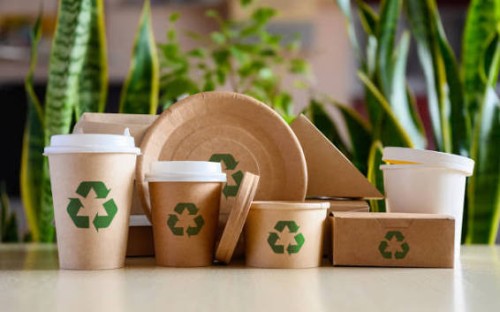
According to Fortune Business Insights, the global food packaging industry was valued at $522.2 billion in 2025 and is expected to grow from $564.02 billion in 2026 to $930.89 billion in 2034.
This shows growing consumer demand for food packaging, driven by shifting consumption habits and lifestyle changes. This is why it has become increasingly important for food business owners and food packaging importers and distributors to source packaging that meets customer demand while protecting food and the environment. If you are also looking for how to source food packaging and which materials and quality checks to consider, this guide will help you with that.

Many materials are used in food packaging, each with its own advantages and disadvantages. Some of the common materials among them are:
Plastic is one of the most common and widely used food packaging materials for both dry and wet foods. The most common type of plastic is polyethylene (including PET, HDPE, and LDPE), as it adapts to almost any food item. PET has widely replaced glass because it is lightweight and shatterproof, making it easy to handle during shipping.
Metals are also widely used in food packaging, with common examples including tin, aluminum, and steel. They are robust, long-lasting, and provide superior protection for food products.
Glass is one of the oldest materials used for food packaging. This is because glass is inert when in contact with food and can be used to pack any kind of food item, whether wet, dry, or even acidic. It is widely used to make bottles and jars for storing juices, syrups, vinegar, and oils.
Wood derivatives such as cardboard and paper are also widely used in the food packaging industry. Cardboard is extensively used in tertiary packaging as corrugated cardboard boxes and foldable cartons. Paper, on the other hand, is used as paperboard with added barrier properties to store dry, non-wet food items.
Ceramic is a non-toxic, noncorrosive food packaging material made from natural substances such as quartz and clay. It prevents food contamination and can be used to pack both wet and dry foods.
Cellulose, which is often mistaken for plastic packaging, is one of the few organic packaging materials. Cellophane sheets and shrink wraps are made from it to wrap or cover food products.
|
Food Packaging Material |
Advantages |
Disadvantages |
|
Plastic |
Low-cost, moisture-resistant, flexible, and can be directly labeled. |
Harmful for the environment, not suitable for hot food items, and non-recyclable. |
|
Metals |
Rigid, moisture- and pest-resistant, and prevents food contamination. |
Expensive, prone to corrosion, unsuitable for acidic foods, and not flexible. |
|
Glass |
Noncorrosive and inert. Safest food packaging material for humans. |
Highly brittle, heavy, and expensive. |
|
Paper and Cardboard |
Low cost, lightweight, easy to print on, and recyclable. |
Weak and easily tearable. Can only pack dry food items. |
|
Ceramics |
Biodegradable, aesthetically pleasing packaging. Prevents food contamination and preserves food quality as it is nontoxic and noncorrosive. |
Brittle, more expensive than glass, and limited packaging sizes. |
|
Cellulose |
Sustainable and biodegradable option. Moisture- and heat-resistant when in contact with food. |
Weak and unsuitable for food products with a long shelf life. |
Once you have identified the material you want the food packaging in, the next step is to source it. There are many ways through which you can find food packaging suppliers, wholesalers, and manufacturers.
B2B platforms list a range of food packaging suppliers, including Tradewheel.com, Berlin Packaging, and Surch Foods, offering packaging in different materials, price ranges, customization options, MOQs, and more. Buyers can visit the food packaging and supplier page and look for the ones that manufacture according to their requirements. They can also post RFQs with their specifications and compare suppliers that send quotations.
You can also find food packaging manufacturers by asking for relevant food packaging contacts used by established food businesses. It is highly probable that you can get access to suppliers who are genuine and well-established in this business. However, these businesses may have high MOQs, which might not suit small businesses or low-volume orders.
B2B food packaging buyers can also directly contact manufacturers and suppliers found through online searches, packaging directories, and trade shows. Searching online for the relevant food product type, material, and country you want to source from can give you options that match your requirements. However, do your due diligence before sharing sensitive information or placing bulk orders.
Packaging directories can also help you find businesses in this industry along with their past trade data. This can help you identify the ones that can meet your order volume. On the other hand, trade shows let you physically assess a company's products and help separate manufacturers and suppliers from middlemen.
Minimum Order Quantity (MOQ) is the minimum number of pieces or value you must order or spend when purchasing from a supplier. A higher MOQ means you must commit more capital to food packaging inventory, while a lower MOQ means the opposite. Food packaging MOQ for wholesale buyers generally depends on the following factors:
The biggest factor affecting MOQ is customization. Customizing food packaging requires printing setup, color matching, and production setup, making custom products expensive and requiring higher MOQs.
The material you choose for food packaging also affects MOQ, as different materials affect production efficiency.
Product complexity also affects MOQ. Special coatings, unique structural designs, and multiple compartments raise costs and, therefore, the MOQ for food packaging.
When estimating how many pieces you need to order from a supplier, keep these factors in mind. Also, confirm the MOQ with suppliers, so you know how much inventory you must commit to, whether you want that many products or not.
Sourcing quality food packaging not only helps meet regulatory requirements, but also prevents food wastage and contamination and maintains consumers' trust. So, whenever you order food packaging from a manufacturer, wholesaler, or any business, request a sample and assess it using the following metrics.
First, ensure the supplier you choose has the required third-party GFSI-compliant food packaging certifications, such as BRCGS, SQF, and more.
Assess whether the packaging seal is strong enough to prevent gas exchange, leaks, and microbial entry through bubble emission, peel, and burst tests.
Check the barrier properties of the food packaging, particularly the oxygen transmission rate for oxygen-sensitive products like snacks and dairy products and the water vapor transmission rate for dry products.
Check the packaging dimensions and weight against the required specifications.
Evaluate chemical transmission from the food packaging into the food, along with off-odor and off-taste transfer.
Analyze food packaging colors and print quality, especially expiration dates and the UPC and QR codes.
Evaluating B2B food packaging against these metrics will help you avoid regulatory issues and get packaging that meets your requirements.
When looking for food packaging suppliers for your business, first evaluate the material you want it made from. Then look for suppliers that manufacture or supply that type of packaging. Send them inquiries and request quotations so that you can compare them to evaluate which supplier fits you best in terms of MOQ, price, quality, certifications, shipping methods, etc. Shortlist a few and request samples from them to further evaluate the packaging quality. Then discuss the payment terms and place the order. Not following this basic process when sourcing food packaging may lead to inconsistent or unwanted materials and quality in food packaging.
Ready to source food packaging for your business? Explore B2B marketplaces, select a few packaging suppliers, and follow the process mentioned above to strike a successful deal with them.




Food packaging tests check safety, durability, and how well the packaging protects the food. Common tests include chemical and safety testing, physical and mechanical tests, and barrier protection tests.
Universal requirements for food packaging include using food-grade materials that prevent chemical transmission and displaying accurate product labels with the ingredients list, manufacturer's name, expiration date, etc.
To choose the right food packaging material for your product, match the physical and chemical needs of your product to the protective properties offered by the different types of materials, along with their cost and environmental impact.