
Best Source for B2B Industry Trends, News and Updates
There are many types of packaging bags available for businesses or companies to choose from. However, selecting the right packaging bag is essential, as it not only enhances your brand presentation but also protects your product, extends shelf life, and improves user convenience.
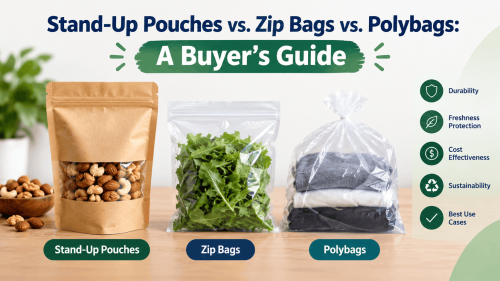
When choosing between different packaging options, manufacturing and wholesale buyers should first consider what their business actually demands. Is the product you are supplying in powder form or solid? Then look at whether it requires moisture or oxygen barrier protection or vacuum sealing. You also need to understand your target budget, storage conditions, and intended use before selecting the right packaging.
This guide explores three common packaging options: stand-up pouches, zip bags, and polybags, with the industries they suit, their applications, and potential limitations.
Stand-up pouches are flexible packaging pouches designed with a bottom gusset that helps them stand upright once filled. Their self-supporting structure makes them suitable for retail shelves, product storage, and transportation. These bags can be made using different materials such as PET, PE, aluminum foil, and laminated foils.
However, depending on the product requirements, manufacturers can use multiple layers to support the content weight and provide barrier protection against oxygen, air, light, or dust. These pouches are available with multiple opening types, such as resealable zippers, hang holes, tear notches, or heat-seal tops.
Zipper openings enable users to open and close the packaging multiple times, whereas the tear notches make the initial opening much easier. The bags may also come with a transparent window that supports great product visibility, which is particularly useful for retail shops.
Stand-up pouches are widely used for packing snacks, coffee, spices, nuts, protein powders, and pet food. These bags allow customization in sizes, colors, and printing; thus, they are a practical choice for food manufacturers, wholesale buyers, and retailers. However, they may require more money per unit for production and printing than basic polybags.
Zip bags are considered a flexible packaging option that comes with a joined zipper closure, making the packaging suitable for many uses. These bags are commonly manufactured using LDPE, LLDPE, or other flexible plastic materials. They are lightweight and can be durable depending on the material thickness, making them suitable for everyday handling.
Depending on the selected material thickness and zipper quality, these bags may also provide limited barrier protection against moisture, dust, and external factors. Their resealable features make zipper bags a convenient choice for brands distributing products that require repeated access. Zip bags are used for several applications, including food storage, sample distribution, small industrial components, jewelry, stationery, and other pharmaceutical products.
Polybags are flexible packaging bags generally manufactured from polythene film. They are mostly available in an open-ended type without an integrated zipper, which keeps manufacturing costs minimal and offers budget-friendly options for brands.
Moreover, packaging buyers or wholesalers may also choose from different material variations, including LDPE, HDPE, and LLDPE, based on their requirements for flexibility, structural strength, and stiffness.
Polybags enable high customization in sizes, colors, thickness, and closure methods such as heat seal, twist ties, or adhesive tape. They can also be customized using gussets and brand logo printing options to suit multiple businesses. Polybags are used for garment packaging, industrial components, textiles, hardware, retail shops, and bulk product storage.
|
Comparison Factor |
Stand-Up Pouches |
Zip Bags |
Polybags |
|
Structure |
Bottom gusset |
Flat or expandable |
Usually flat or gusseted |
|
Closure |
Heat seal or zipper |
Resealable zipper |
Open top, or other closure options |
|
Shelf presentation |
High |
Moderate |
Basic |
|
Reusability |
Depends on closure |
Generally reusable |
Depends on material and closure type |
|
Storage |
Upright display |
Compact storage |
Compact storage |
|
Product protection |
Depends on barrier layers |
Depends on material thickness and zipper seal |
Depends on used material and closure |
|
Common use |
Food and retail products |
Small goods and food storage, or sample distribution |
Garments and bulk industrial goods |
Consider these important factors when deciding on the packaging material to meet project requirements:
Different products require specific materials, thickness, and bag styles. First, understand the nature of the product you are offering; whether it is solid, liquid, powder, granular, or fragile. Powdered products may require dust-control packaging with a tighter seal to prevent leakage, whereas fresh food may need perforated packaging to allow airflow and maintain freshness. So, it is better to check the compatibility of the product with the packaging material and select a suitable option based on product weight, volume, size, and storage requirements.
Consider the product's sensitivity and storage requirements to maintain its quality and ensure maximum protection. Check whether the selected packaging can protect the product from moisture, oxygen, light, dust, and other contaminants.
Choose a closing mechanism while considering customer convenience. Press-to-close or slide-down zippers work best for multi-use food or snacks. Tear notches are suitable for single-use or small-sized packets. A tamper-evident seal can support companies that distribute electronics or products that need additional protection for visible evidence of interference. Moreover, when deciding on a seal type, examine its strength first to prevent accidental opening during handling or shipment
Instead of selecting a packaging bag solely on appearance, first consider the expected storage duration and surrounding temperature conditions. Confirm whether the material is durable enough to withstand the estimated storage and transport conditions while protecting the product securely. Also assess the packaging weight and dimensions to determine how much space it will occupy during shipment, and whether the packaging weight is heavy enough to raise the shipping cost.
Consider whether the selected material allows customization in different aspects such as sizes, colors, printing methods, finishes, and logo placement. However, before finalizing a bulk packaging bag shipment, packaging businesses should also evaluate the supplier’s manufacturing capability in their target industry. Review previous exports, customer feedback, and production capacity to determine whether they can maintain consistent quality for large orders.
Request quotations from multiple packaging manufacturers or suppliers. Compare prices for different packaging bag materials at different order volumes. Include additional tooling, printing, customization, insurance, shipping, and import duty charges to estimate the total landed cost. This comparison helps buyers select a packaging bag that suits their business needs while staying within the set procurement budget.
Some important channels that buyers can explore to source packaging bags from manufacturers include the following:
Business owners and retailers can use Wonnda to connect with different packaging bag materials and wholesale bag suppliers. Buyers can review the available listings based on the product specifications, read customer reviews, and send an inquiry to discuss available volumes and negotiate a bulk order.
It is crucial to analyze the final quoted price to confirm whether it includes all the additional charges. This may include charges such as sampling, tooling, shipping, or destination delivery fees. Clarifying these costs in advance helps avoid misunderstandings and unexpected expenses once the shipment arrives.
IndiaMART is a B2B sourcing platform where packaging bag buyers can connect with a wide range of suppliers offering products in different materials and closure types. Send an inquiry to request applicable certifications and lab reports to ensure quality control and to minimize delivery issues. Whether you want polybags for shipment or zipper pouches, explore the available listings and confirm the MOQ and supplier production capacity to proceed with a packaging bag order.
Explore Tradewheel.com to discover multiple wholesale packaging bag options offered by trusted suppliers from different countries such as China, India, Hong Kong, the USA, and Turkey. Buyers should review the detailed product listing about the material used, thickness, dimensions, compatibility, and closure type to determine whether the product suits their product requirements.
Send an RFQ to discuss in detail the available customization options for size, color, and logo placement. An experienced supplier can also highlight the custom limitations or suggest changes in material thickness to match the product's nature, weight, and compatibility.
Thus, businesses should always verify whether the supplier is reliable, has a consistent export history, positive reviews, and an authentic business address to confirm their consistent quality and reliable delivery terms.
ClearBags is a packaging supplier directory supplying flexible packaging products, including stand-up pouches, zipper bags, clear plastic bags, and food-safe packaging. It offers a wide range of packaging solutions for food manufacturers, snack businesses, bakeries, pet food companies, and retail brands. Buyers can explore different bag sizes, materials, and designs, along with custom printing options. The company also offers samples to support quality assessment before ordering.
The Packaging Source is a wholesale packaging supplier that serves retailers, boutiques, gift shops, and food-service businesses. Its product range includes plastic and paper bags, garment bags, gift boxes, and custom-printed packaging materials. Businesses can fill out the contact form to request customized designs with their company logos.
Material Specifications - Consider the material grade, thickness, recyclable content, and barrier protection.
Dimensions and Capacity - Verify bag width, length, gusset, or product filling capacity.
Quality Testing and Certifications - Check seal strength, puncture resistance, and zipper performance where possible. Request relevant food-related certifications, quality control reports, and compliance documents.
Samples - Avoid trusting the uploaded videos or photographs. Request samples to assess material quality, compatibility, finishing, and printing, and moisture barrier before placing an order for bulk production.
Supplier Capacity - Confirm the production lead times, estimated delivery date, and how late orders are handled.
Choosing the right packaging bag requires buyers to consider more than just the lowest price. Evaluate the product compatibility, material strength, barrier protection, closure mechanisms, estimated storage time and conditions, and transit requirements. Do not commit to large orders before reviewing the available customization options and supplier credibility to prevent businesses from facing monetary losses.
To maintain a consistent packaging bag supply chain connection with a reliable supplier, request samples and certifications. Review export history and compare suppliers based on prices at different volumes to select a suitable packaging solution that meets their operational needs and budget.




Yes, before placing an order, carefully analyze the final cost to avoid future misunderstandings. Check whether it includes customization, packaging, sampling, tooling, customs clearance, or additional charges.
Buyers should discuss the required volume, desired material, thickness, and product weight, nature, dimensions, estimated lead time, production capacity, and final delivery date before requesting a quotation.
Buyers should review material specifications, bag dimensions, thickness, closure strength, customization options, MOQ, production capacity, and delivery timelines. Requesting samples and comparing supplier quotations before order confirmation can also help avoid quality-related procurement challenges.