
Best Source for B2B Industry Trends, News and Updates
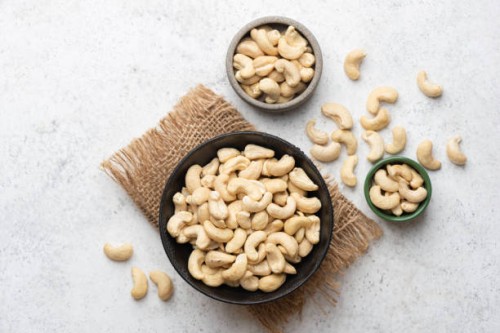
Exporters that want to sell cashew nuts internationally should understand early on that collecting many buyer contacts won’t necessarily lead to a successful deal. A better approach is to identify the right market for their product, find relevant cashew nut buyers, and then decide which ones are worth pursuing.
This guide will tell exporters how to identify international markets, find cashew nut importers, qualify potential buyers, prepare a buyer-ready offer, and turn promising leads into successful business relationships.

Finding cashew nut buyers involves a simple 6-step process, which, if followed, may help you secure buyers for your next international trade. Here is how you can find international buyers:
Before searching for cashew nut buyers worldwide, identify which type of customer to target. This is because cashew nuts move through several parts of the supply chain, and each buyer has different requirements according to their application.
|
Product type |
Target customer |
Typical buying requirements |
|
Raw or in-shell cashew nuts |
Cashew processors and raw cashew nut buyers |
Origin, nut quality, and processing economics. |
|
Processed cashew kernels |
Importers, distributors, and wholesalers |
Kernel form, grade, size, appearance, packaging, shelf life, and consistency. |
|
Cashew pieces and smaller cashew kernels |
Food manufacturers producing confectionery, bakery, cereals, snacks, and other food products. |
Piece size and cut, color, moisture content, consistency, and food-safety requirements. |
|
Roasted, flavored, organic, or packaged cashews |
Retailers and private label customers |
Packaging, labeling, certifications, branding, and finished product presentation. |
The key to selecting the right target customer is to match what you sell with who needs it rather than approaching every buyer in the cashew directory.
After identifying the target customer, the next step is to find countries worth considering. A common mistake that many exporters make is that they select a country because it has a large population or is known for importing nuts. Instead, they should be using trade data to identify potential markets based on their product type.
International trade databases can be used to identify and compare markets using indicators such as import value, quantity, growth, supplier countries, and market share. Exporters can use WITS to get detailed international trade statistics, which can help businesses compare importing and exporting markets.
Exporters should also check the product classification they are searching because some broad HS codes might cover multiple types of nuts rather than cashews alone. Using a relevant product code will give you an accurate picture of the demand for the product being supplied.
Exporters who want to specifically focus on the US market can use USDA fruit and tree nut trade data, which includes commodity-specific trade values, volumes, and unit values. USDA data is updated monthly, giving exporters insight into the most recent information.
Import volumes alone will not tell you whether a market is suitable. Exporters will also have to evaluate the market based on their product type.
They could compare the potential markets based on demand for their supplied cashew format, product specifications, competition from other suppliers, import and food safety requirements, certifications requested by the buyer, general order volumes, shipping distance, and the ability to offer competitive landed costs.
For example, an exporter of premium kernels may prioritize markets that serve retailers and snack businesses, whereas an exporter of broken cashew pieces may select a market that has better opportunities with food manufacturers.
A target market with the largest pool of importers and buyers is not always the best market to sell your product. Exporters and suppliers should consider markets that have little competition, accessible buyers, suitable specifications, and manageable compliance requirements. Therefore, the objective of exporters should be to find the best-fit market rather than finding the largest market.
After selecting your target market, the next step is to start building a potential international cashew nut buyer list. You can find them in the following ways.
Businesses can use B2B marketplaces to find importers, wholesalers, retailers, and commercial buyers. Instead of using general terms such as ‘cashew nuts’, they should use specific terms while listing their product, such as whole cashew kernels, raw cashew nuts, bulk cashews, organic cashews, etc. This will help them receive relevant inquiries from buyers.
Exporters can use several B2B platforms such as Tradewheel.com, Torg, Freshdi, etc., to find relevant buyers based on their cashew nut type. However, they should independently verify the buyers found on the platforms before placing large orders.
Trade and import databases can sometimes be more useful than static buyer lists as they can reveal the actual import activities of relevant companies. Depending on the database, businesses can investigate buyer names, product descriptions, origin countries, shipment frequencies, import quantities, destination markets, etc. Searching import and shipment databases helps exporters move from a broad list of buyers to prospects with evidence of purchasing history.
Trade exhibitions, food ingredient events, nut industry events, and importer associations can also help exporters find potential buyers. Finding buyers through these channels is particularly useful when exporters want to build supplier relationships rather than collect unqualified leads.
Once you find a promising importer or distributor, you can also research the company and approach the person who handles the purchasing of cashew nuts directly. You may approach people like a procurement manager, import manager, sourcing manager, purchasing manager, category manager, or food ingredients buyer. Approaching buyers through them is a more targeted way of securing leads rather than sending messages to the company’s general address.
Finding buyers and companies is only the first step. Next, determine whether the prospect is worth your time. You may find that out in the following ways:
Confirm whether the buyer purchases the type of cashew you deal in. You can find that through their company website, inquiry, or by checking what the company deals in. For example, a company dealing in premium cashew nuts may not be interested in industrial-grade cashews even though both qualify as cashew buyers.
Check the company’s commercial activity, such as previous imports, buying frequency, product categories, sourcing countries, distribution markets, and approximate purchasing capacity. A company with recent and relevant commercial data is more relevant than one with generic or no data available.
Before confirming an order from the buyer, verify their company. You may review their business website and address, registered company identity, corporate email, the contact person’s relationship to the company, and their relevant trade activity.
This step does not prove that every buyer is genuine through a single check; instead, it helps prioritize buyers that fit the product and have relevant commercial activity.
Once an exporter has shortlisted qualified prospects, they must prepare an export offer with all necessary details to send to buyers when required. In the offer, they must include the product specifications in detail so that the buyer is not left with ambiguity.
For example, the Global Cashew Council notes that cashew kernels are classified by size, shape, and color, and have whole-kernel size codes such as 180, 210, 240, 320, 450, and 500. Therefore, avoid sending general product descriptions such as ‘premium cashews’ and instead send detailed specifications, including grade, origin, size, color, moisture content, defect tolerances, available quantity, etc.
Also include details on MOQ, available quantity, Incoterms, port of loading, payment terms, sample policy, packaging, lead time, etc. Moreover, depending on the destination and the buyer's requirements, exporters may also need to have documentation related to food safety, quality, phytosanitary requirements, and other relevant certifications.
Before moving towards the transaction process after finding the buyer, exporters and suppliers should ensure that the buyer clearly understands what is being purchased and under what terms.
Product specifications, quantity, packaging, quality requirements, and inspection policy should be clearly communicated and documented before finalizing the deal. This is very important for agricultural products such as cashew nuts, as ‘premium’ and ‘high quality’ often mean different things to different buyers.
Second, ensure that the payment terms, Incoterms, delivery schedule, destination, and who is responsible for which part are absolutely clear and agreed upon by both sides.
Once the order is completed successfully, keep records of the buyer’s required specifications, quantity, purchasing cycle, packaging requirements, and feedback. This will help the exporter build a diversified portfolio of cashew nut importers and make future orders easier to negotiate rather than relying on only one customer.
Finding cashew nut buyers worldwide does not mean collecting as many buyer contacts as the exporter can. Instead, stronger export opportunities often come from buyers whose purchasing needs align with the product type, quality, market, and ability to supply consistently.
Having a focused approach can help turn scattered buyer searches into a reliable buyer sales pipeline. Instead of pursuing every inquiry, invest your time in prospects that are a genuine fit and have the potential to become repeat customers.
Ready to expand your cashew nut export business? Start by finding prospective buyers, verifying them, shortlisting them, and approaching them with a commercially competitive offer.




You can find cashew nut buyers worldwide by searching for them through a combination of B2B marketplaces, industry trade shows, directories, shipment databases, and direct outreach. The strongest prospective buyer is the one whose purchasing activity matches your supply.
You can avoid fake cashew buyers by verifying their business information, address, website, corporate email, relevant trade activity, and the contact person’s relationship with the company. Stay cautious of buyers who give inconsistent business information, make unrealistic requests, or ask for suspicious fees before establishing a genuine transaction.
Raw cashew nuts (RCN) are unshelled nuts obtained after harvesting and are generally sold to cashew processors with the facilities to remove the shells and produce edible kernels. Cashew kernels are processed kernels that can be directly sold to importers, distributors, wholesalers, retailers, and food manufacturers. This difference matters when finding buyers, as exporters of each type target different buyers.